
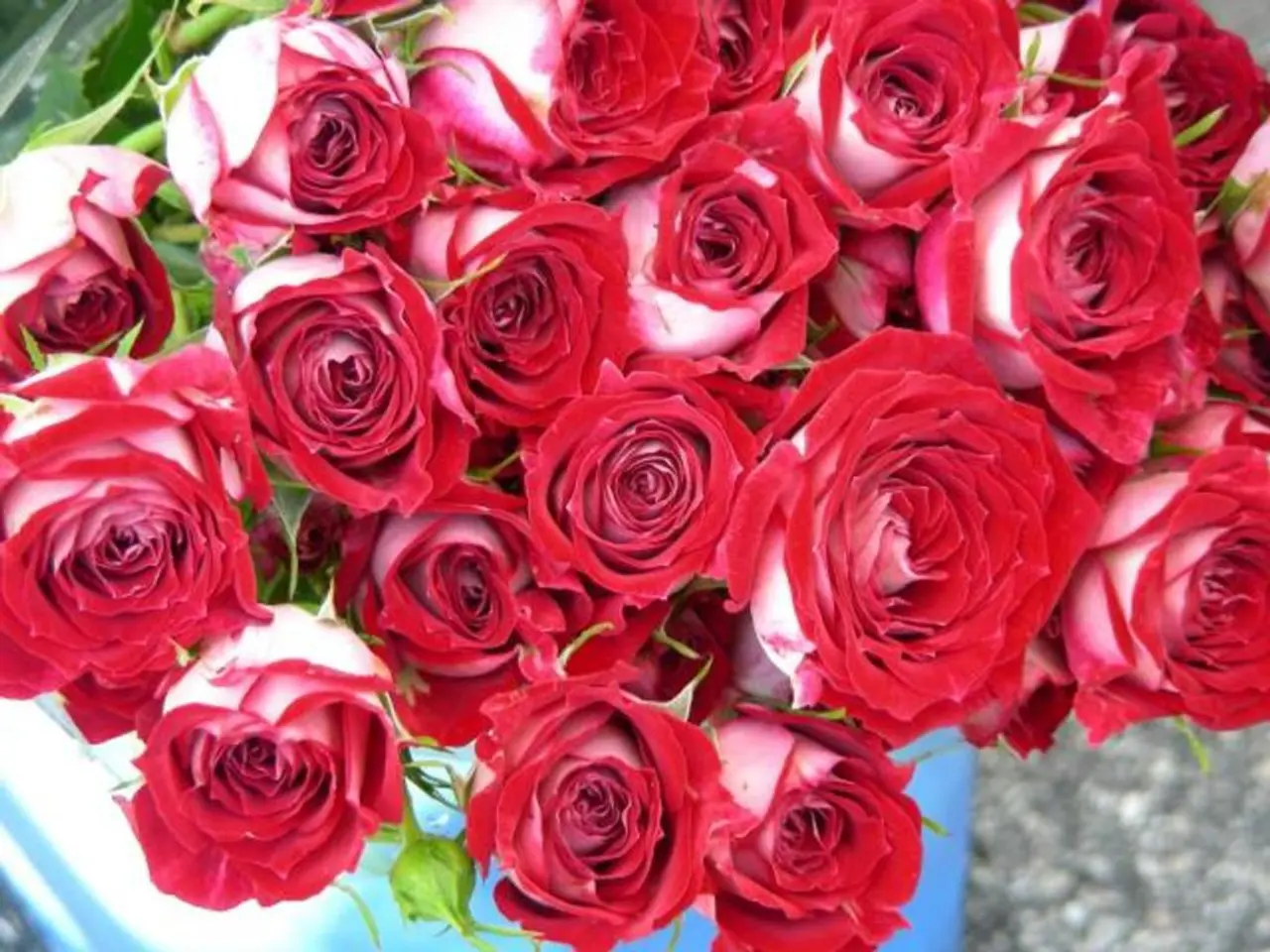
Top Picks for Plant Partners to Enhance Your Rose Garden
In the world of gardening, companion plants for roses have been a cherished secret for centuries. These plants not only complement the beauty of roses but also contribute to their health and vitality. Here are seven top companion plants for roses and their benefits in a rose garden.
1. **Nepeta (Catmint)** - This versatile and hardy companion plant attracts pollinators and beneficial insects, its grey-green foliage contrasting nicely with rose blooms. It provides ground cover that suppresses weeds and keeps soil cool.
2. **Salvia** - Offering long-lasting spikes of flowers, Salvia extends the garden’s flowering season and attracts pollinators such as bees and butterflies. Its vertical form contrasts well with the roundness of roses, adding texture.
3. **Veronica** - Producing tall flower spikes, Veronica provides vertical interest, blooms throughout the summer, filling gaps between rose flushes, and attracts pollinators and beneficial insects to the garden.
4. **Geraniums (Hardy Cranesbills, e.g., Geranium ‘Rozanne’)** - With a prolonged flowering season from early summer to autumn, Geraniums soften the base of shrub roses, are resilient to heat and drought once established, and require low maintenance.
5. **Campanula (Bellflowers)** - Offering charming bell-shaped flowers, Campanula brightens shady or partially sunny areas and adds delicate lightness contrasting with the dense rose flowers.
6. **Verbena bonariensis** - Tall, slender stems topped with violet flower clusters, Verbena adds height and airiness, creating movement and contrast with rose foliage. It blooms attracts pollinators continuously throughout the season.
7. **Clematis (especially Viticella group)** - Providing long-lasting blooms that complement climbing roses, Clematis weaves through rose branches adding texture and seasonal rhythm. It fills visual gaps during quiet periods between rose bloom flushes.
These companions not only enhance the visual appeal by offering contrasting forms, colors, and blooming periods but also support the health of rose plants by attracting pollinators, beneficial insects, and providing ground cover that reduces weeds and maintains soil moisture.
However, it's essential to avoid planting aggressive or shade-casting plants like morning glories, lilacs, and hollyhocks near roses, as they can compete for resources and increase fungal disease risks.
By carefully selecting and arranging these companion plants, roses can reach their full potential in health and aesthetic appeal. Hardy geraniums, for instance, are perennials that can survive cold winters, particularly in USDA hardiness zones 4-9. To prepare for winter, cut back the foliage after the first frost and mulch around the base of the plant to insulate the roots.
In addition, Artemisia, a silver-leafed plant, can thrive in poor soil conditions and acts as a fantastic companion plant due to its ability to improve soil structure, provide a contrast to the vibrant colors of roses, and repel pests. Agastache is one of the best choices for late summer blooms and maintaining year-round interest in the garden.
With these companion plants, your rose garden will not only be a feast for the eyes but also a haven for pollinators and beneficial insects, creating a harmonious and thriving ecosystem.
The addition of Nepeta (Catmint) to a rose garden not only offers contrasting foliage but also attracts pollinators, supplying ground cover that helps keep soil cool and suppress weeds.
Home-and-garden enthusiasts may find Verbena bonariensis beneficial as it provides height and airiness, creating movement and contrast, while attracting pollinators continuously throughout the season.