
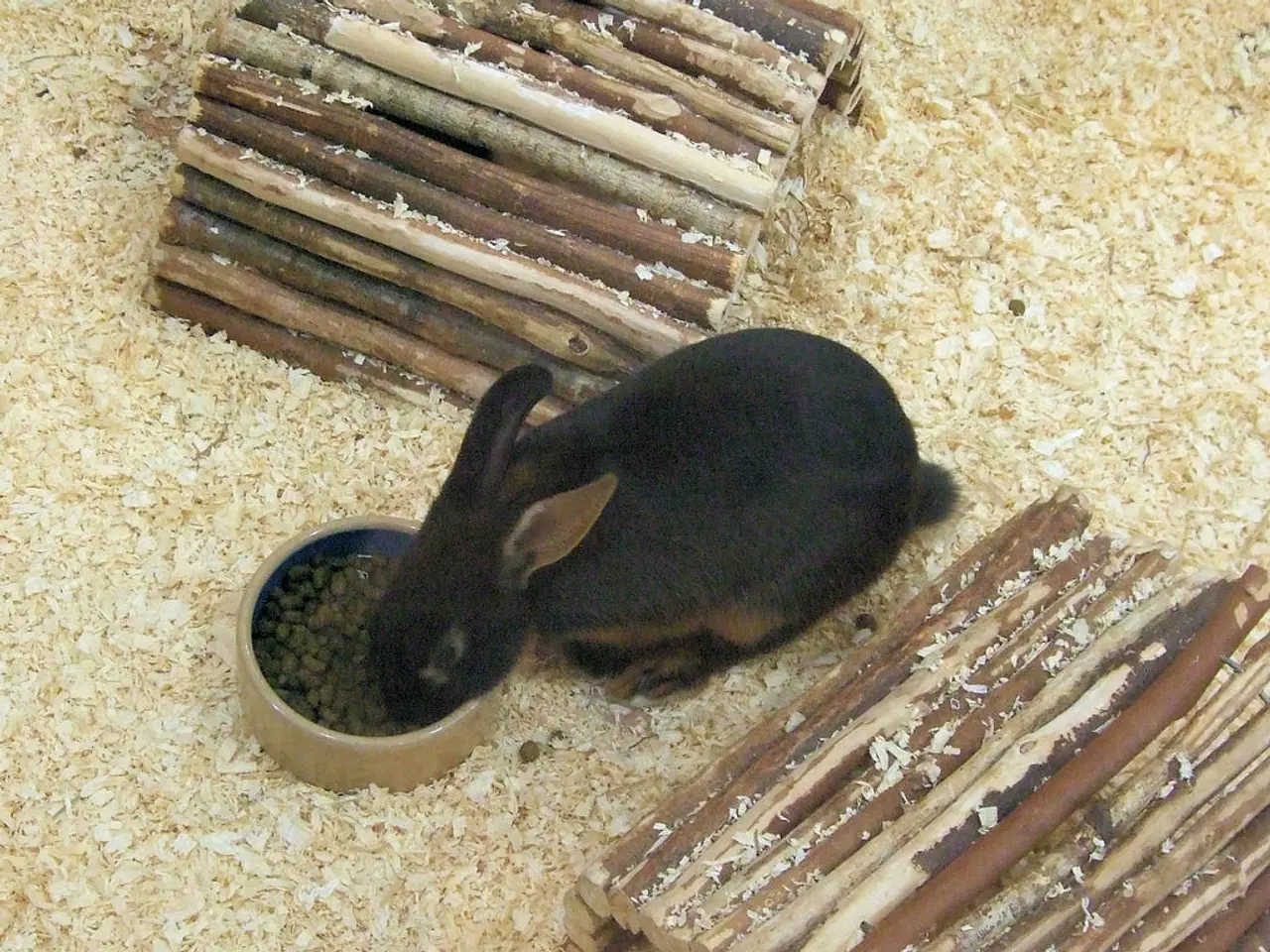
Tips from a Vet on Keeping Rabbits Warm During Winter
As the cold weather sets in, it's crucial to ensure our furry friends, rabbits, stay warm and comfortable. Dr. MacMillan, a vet with expertise in rabbit care, shares valuable insights on keeping rabbits warm during the winter months.
Firstly, a rabbit's home and exercise area should be well-maintained. Check for damp patches, lift living quarters off the ground, and fix any structural issues to prevent drafts. For outdoor rabbit hutches, weatherproofing, adding insulation, wind protection, and ensuring proper ventilation are essential.
Weatherproofing can be achieved by covering the hutch with a waterproof tarpaulin or clear plastic sheeting/Plexiglas to shield it from rain, snow, and wind. Insulation can be added by placing layers of old blankets, thick carpets, straw, or cardboard over and around the hutch, keeping them out of the rabbit's reach to avoid chewing hazards.
Windbreaks such as wooden panels or sturdy plastic sheets can be positioned around the hutch and any attached run, while the hutch should face away from prevailing cold winds. Inside the hutch, thick bedding like straw or soft hay should be added to keep the rabbit warm and insulated from the cold floor.
Ventilation is still vital to prevent moisture buildup and respiratory issues. Avoid sealing the hutch completely airtight; leave small vents or gaps protected from direct wind flow. For longer-term insulation, non-toxic insulation panels can be installed inside the walls or roof of the hutch.
In unheated spaces, the enclosure still requires extra insulation and bedding as advised earlier. A waterproof cover or tarpaulin can be put over a rabbit's home, but ensure that they still get some ventilation through any wire mesh areas.
Rabbits need to have access to fresh water at all times during the winter. Checking the rabbit's water daily is necessary, as water bowls and bottles can freeze. The Snugglesafe Microwave Heating Pad Disc, which is waterproof, bite-resistant, and doesn't have any wires for them to chew on, can help keep a rabbit warm for up to 10 hours.
Dr. MacMillan advises that rabbits should get enough greens during the winter, alongside ad-lib hay. If bringing the rabbit indoors isn't possible, an unused garage or large shed can be used, but it needs a window and an indoor rabbit hutch setup.
Rabbits display normal behaviours like playing, eating, and producing lots of feces when they are warm enough. However, if they seem quiet, limp, or very sleepy, take them to a vet immediately, as rabbits do not hibernate. Providing more nesting materials like the best bedding for rabbits and a fleecy cover over a heat pad can help keep a rabbit warm when they're sleeping.
Measuring the environment's temperature with a thermometer can help determine if the rabbit is warm enough. The ideal temperature for a rabbit's home is between 50-68°F (10-20°C). By following these tips, we can provide a warm, dry, and safe environment for our rabbits during winter while preventing health risks associated with cold and damp conditions.
- In addition to rabbits, it's essential to consider the health of other pets during the cold weather, ensuring that their nutrition needs are met and their behavior remains normal.
- For instance, cats and dogs, just like rabbits, require proper care to ensure their lifestyles remain undisturbed by the chill.
- When maintaining a cat's home, it's important to clean litter boxes frequently and provide warm, cozy beds to help keep them comfortable.
- As for dogs, they might need extra food to maintain their energy during the cold months, and providing a protective coat or sweater can help keep them warm.
- In the home-and-garden department, setting up a cozy, insulated area for outdoor pets like cats and small dogs can also be beneficial.
- Just as Dr. MacMillan emphasized the importance of regular vet check-ups for rabbits, it's wise to schedule annual veterinary visits for pets of all kinds to ensure their overall health throughout the winter season.