Bonsai Containers and Designs: Harmonizing for Amplified Aesthetics
In the world of bonsai, the pot you choose for your tree is just as important as the tree itself. The right pot can enhance the beauty of your bonsai, while the wrong one can disrupt the balance and detract from its overall visual appeal.
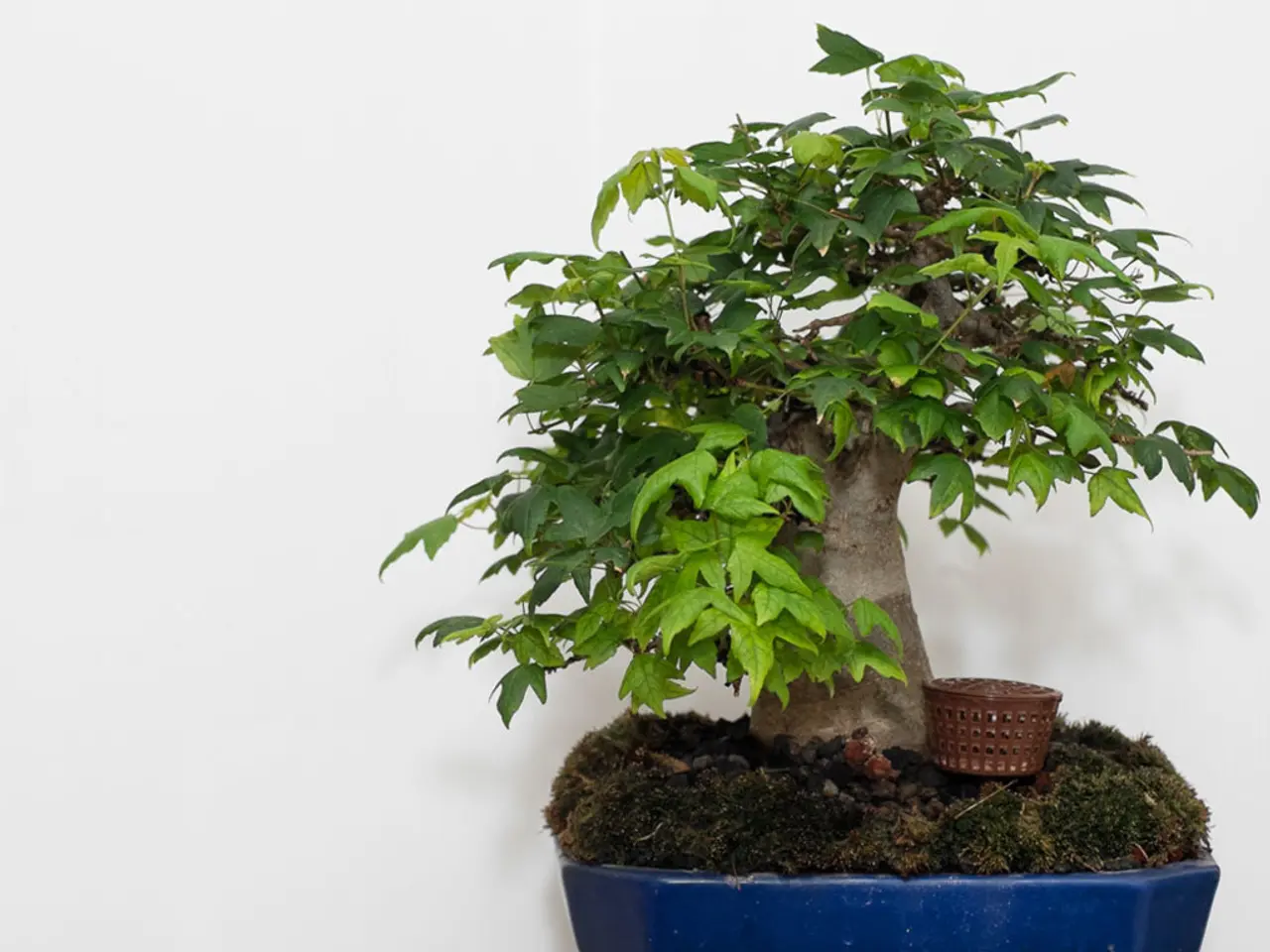
When it comes to formal upright tree compositions, such as the Chokkan style, a rectangular bonsai pot is the best choice. Its clean, straight lines complement and enhance the tall, straight, and symmetrical form of the formal upright style, providing a solid and structured look that suits the nature of the tree perfectly.
Additional details to consider when choosing the pot include the depth, material, and size. Bonsai pots are generally shallow to encourage root development and maintain the miniaturized size of the tree. Clay or ceramic pots are preferred, as they are strong, frost-resistant, and provide proper drainage, which is critical for bonsai health. The pot size should be proportional to the tree—too large or too small can disrupt balance and aesthetics.
In Semi-Cascade and Cascade Styles, the pot's shape should complement the tree's movement, creating a sense of fluidity and dynamism. Color harmony is essential in the pot selection process, with the pot's hue echoing or complementing the tree's dominant color. Bold color choices can inject a striking contrast to the subtle beauty of Modern and Contemporary Bonsai styles, creating a visually striking contrast. Unconventional shapes can add an extra layer of visual interest, disrupting the symmetry and challenging traditional notions of what a bonsai pot should be.
When matching pot to tree personality, formal trees require elegant pots, informal trees require rustic pots, upright trees require sturdy pots, and semi-cascade and cascade trees require pots that provide a sense of movement and fluidity. Natural materials such as unglazed ceramic, rough-hewn stone, or weathered wood are effective in creating a sense of harmony with the tree's movement in Semi-Cascade and Cascade Bonsai styles.
Traditional Japanese Bonsai pots come from various regions, each with its unique history, aesthetic, and style. Bonsai tree styles significantly influence the choice of a pot for harmonious visual balance. Clump-style Bonsai compositions require pots that emphasize horizontal lines, feature a wide, shallow shape, incorporate earthy tones, and display subtle ornamentation.
In Root-Over-Rock Bonsai designs, a shallow, wide pot with a subtle lip is often ideal, and earthy tones can create a sense of natural harmony. Organic curves in pots can evoke a sense of fluidity and naturalness, while fragmented forms can create a sense of drama and tension.
A study by the Japanese Bonsai Society reveals that 80% of Bonsai enthusiasts consider the pot a vital element in the overall composition. To achieve visual balance and harmony, consider factors like symmetry and asymmetry, color harmony, texture and pattern, scale and proportion.
In conclusion, the pot you choose for your bonsai tree can greatly enhance its beauty and visual appeal. By considering the tree's size, shape, style, and personality, as well as the desired visual impact, you can select a pot that harmoniously complements your miniature masterpiece.
In the realm of bonsai, the pot's shape and appearance can significantly contribute to the overall visual appeal and balance of a tree in the fashion-and-beauty category. For formal upright tree compositions like the Chokkan style, a rectangular pot is recommended to complement the tree's straight, symmetrical form and provide a structured look (lifestyle).
When selecting a pot for a Semi-Cascade or Cascade Bonsai, its shape should echo the tree's movement, generating a sense of fluidity and dynamism, aligning with modern trends in home-and-garden design (lifestyle). The hue of the pot should harmonize with the tree's dominant color or provide a striking contrast, adding visual interest (fashion-and-beauty).